Arsenal's Chamberlain—Alex Oxlade-Chamberlain—arrived at the Emirates in 2011 as a wiry 17-year-old from Southampton, touted as the next big thing. His first Premier League start against Manchester United that August was a baptism by fire;he was substituted at half-time. Yet within months, he became the youngest English scorer in Champions League history, netting against Olympiacos. That goal—a low drive from the edge of the box—hinted at the explosive potential Arsène Wenger had bet £12 million on. Chamberlain's early Arsenal career was a series of flashes: a stunning solo run against Bayern Munich in 2013, a thunderous strike at Anfield in 2014. But consistency eluded him. Wenger deployed him everywhere—central midfield, wing-back, wide forward—a versatility that sometimes felt like a curse. Watching him in person, you noticed the hesitation: should he dribble or pass?
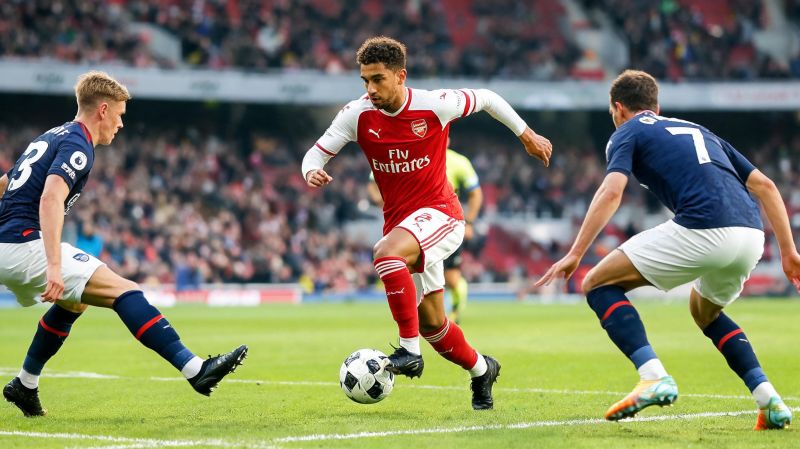
That split-second doubt。between raw instinct and tactical instruction, defined his Arsenal years.Arsenal's Chamberlain never quite nailed down a position, and that became his defining narrative. In 2015-16, he enjoyed his best statistical season—seven goals and seven assists in all competitions—operating from the right flank. His driving runs through the middle, shrugging off challenges with that low center of gravity, electrified the Emirates crowd. There was a home game against Bournemouth where he completed six dribbles and won a penalty;the stadium buzzed every time he touched the ball. But injuries were relentless. Hamstring tweaks, knee issues, groin problems—each setback stole momentum. Between 2011 and 2017, he missed over 50 games through injury. Arsenal's Chamberlain was a Ferrari stuck in the garage. You'd see him dominate for three games, then disappear for six weeks. That inconsistency frustrated fans who saw the talent but rarely the end product. His final season, 2016-17。ended with a FA Cup winner's medal—he played 82 minutes in the final against Chelsea—but his contract situation loomed. With one year left, Arsenal faced a familiar crossroads.
The £35 million sale to Liverpool in August 2017 felt inevitable. Arsenal's Chamberlain wanted central midfield;Wenger saw him as a wing-back. Jürgen Klopp promised the engine room. Initially。it looked like a masterstroke—Chamberlain scored scorchers against Manchester City and Roma in the Champions League. Then came the cruelest blow: a knee injury in April 2018 against Roma, ruling him out of the World Cup and the following season. He returned, won the Premier League and Champions League, but never reclaimed a starting spot. Looking back, Arsenal's Chamberlain was a victim of timing and tactical indecision. Wenger's late-era Arsenal lacked structure;
young players like Chamberlain were asked to improvise rather than develop. Compare his trajectory to Jadon Sancho or Phil Foden—players given defined roles—and you see the difference. Chamberlain's raw tools—pace, power, shooting—were never honed into a coherent skill set. That's on the coaching, not just the player.What's Chamberlain's legacy at Arsenal?Twelve goals in 198 appearances. Not numbers that scream legend. But ask any Arsenal fan about that night at Anfield in 2014—his goal from 25 yards that silenced the Kop—or his performance in the 2017 FA Cup final, and they'll nod. He was a player who made you lean forward. The Emirates era was defined by near-misses and what-ifs, and Chamberlain embodies that. He wasn't a flop—he contributed to three FA Cup wins—but he wasn't the savior either. His story is a cautionary tale about positional clarity and injury luck. Arsenal's Chamberlain never stopped running, never hid. That counts for something. In a era of sterile possession。he offered chaos and thrust. You take that, even with the frustration. The kid from Southampton gave us moments. Sometimes that's enough.